

How to save for your first home in BC
The savings tools available to first-time buyers in BC are better than most people realize. Here is how to use them.
If you are renting in Metro Vancouver and trying to figure out how to get into the market, the good news is that the path is more concrete than it probably feels right now.
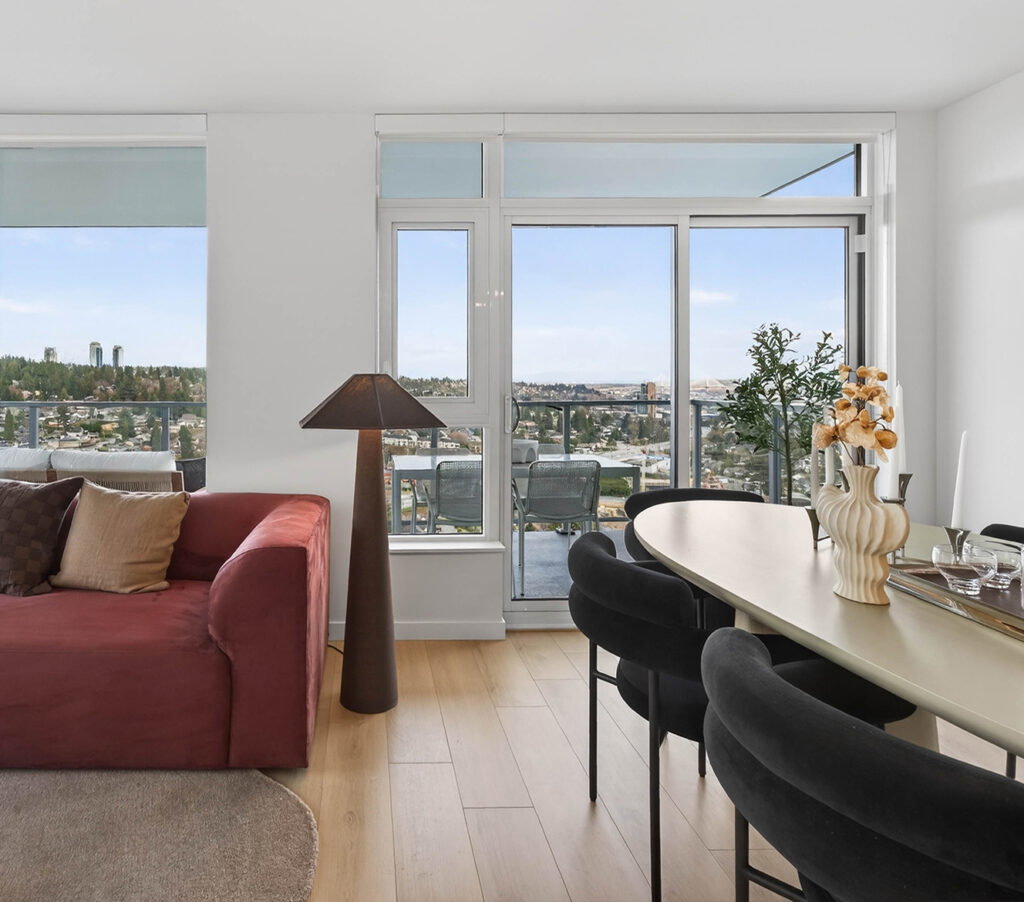
Throughout this post we will use a real home as our anchor: the SOCO One A plan, a move-in-ready studio in Coquitlam available right now at $424,900. With GST financed into the mortgage and first-time buyer exemptions applied, the total cash you need to close is $27,307: $22,307 for the down payment and $5,000 for closing costs. That is the target this post is built around.
There are two registered savings accounts designed specifically to help first-time buyers reach that number, and most people are not using both of them. Here is what they are, how they work, and how fast they can get you to closing day.
The FHSA: a first-time buyer savings account built for this
The First Home Savings Account (FHSA) is a registered account that combines the best parts of an RRSP and a TFSA, designed specifically for first-time buyers. It launched in 2023 and a lot of people still have not opened one. Most banks and credit unions let you open one online in about 15 minutes. You can do it today.
How it works: You contribute up to $8,000 per year. Each dollar is tax-deductible, reducing your taxable income just like an RRSP contribution. Your money grows tax-free inside the account. When you withdraw it to buy your first home, you pay no tax on the withdrawal.
Low risk if your plans change: If you open an FHSA and end up not buying a home, you can transfer the funds to your RRSP tax-free. The transfer does not use up your existing RRSP contribution room, so nothing is wasted. The money stays invested and grows for retirement instead.
The lifetime contribution limit is $40,000. If you opened your FHSA in 2023 and have been maximizing contributions, you could already have $32,000 or more by mid-2026, enough to cover the full $22,307 down payment on this home on its own.

The RRSP Home Buyers’ Plan
If you have money in an RRSP, you can withdraw up to $35,000 from it tax-free under the Home Buyers’ Plan (HBP) and put it toward your down payment. If you are buying with a partner who also qualifies as a first-time buyer, that doubles to $70,000 combined.
Important: You must repay the withdrawn amount back to your RRSP over 15 years, starting two years after you withdraw it. Its value is in the interest-free bridge it provides to homeownership. Miss a repayment in any year and that portion gets added to your taxable income.
The FHSA and RRSP Home Buyers’ Plan can be used together. Most buyers use their FHSA for the bulk of the down payment and the RRSP as a top-up if needed.
A realistic savings timeline
Here is what the path to $27,307 looks like in practice: first-time buyer, buying solo, maximizing their FHSA at $8,000 per year.

Target = $22,307 down payment + $5,000 closing cost reserve. FHSA balance does not include investment growth, which would get you there faster.
Sample calculation(s) for illustrative purposes only.
If you have not opened an FHSA yet, you can still catch up. Unused contribution room carries forward, so opening an account today and contributing the maximum in back-to-back years can compress that timeline significantly. If your RRSP has savings sitting in it, the Home Buyers’ Plan lets you put up to $35,000 of that toward your down payment on top of whatever your FHSA holds.
The number is real. The path is concrete. What usually holds first-time buyers back is not the amount you need to save. It is not knowing the savings math.
The bottom line
The FHSA is the single most efficient savings tool a first-time buyer in BC has access to right now. Tax deduction going in, tax-free growth inside, tax-free withdrawal on the way out. Pair it with the RRSP Home Buyers’ Plan if you need a top-up. Max both and the $27,307 needed to close on a home like the SOCO One A plan is achievable within four years of consistent saving, often sooner. Open the account, set the contributions, and let the math do its job.
See what’s available right now
Every available Anthem home, with pricing and floorplans up front. No registration, no pressure.
Browse Available Homes at startwithanthem.com